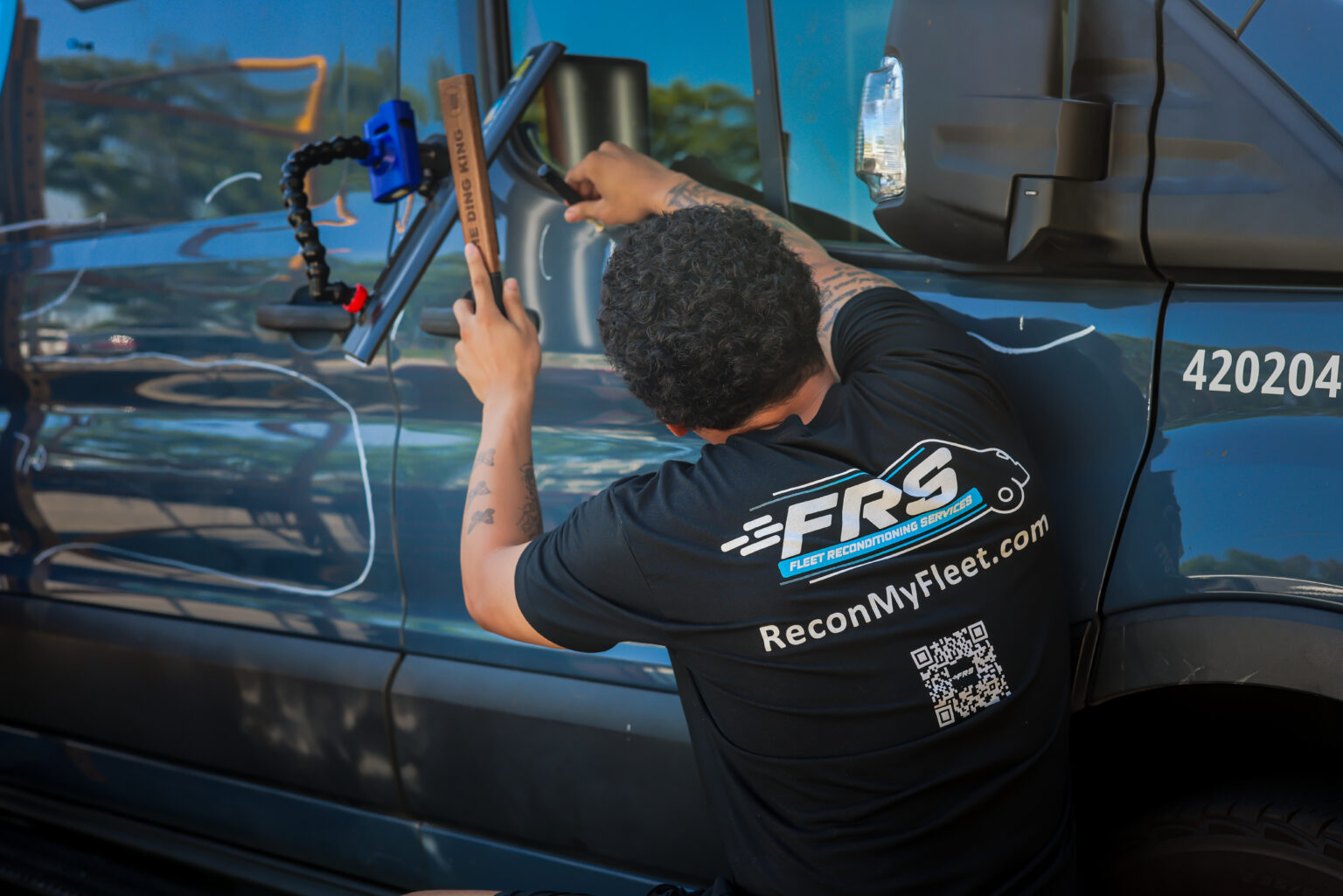
Reconditioning across the full fleet lifecycle.
From routine cosmetic repair to full redeployment and end-of-life reconditioning, FRS delivers a standardized service platform built for cost, speed and scale.
Fleet Reconditioning
A standardized program that restores appearance and integrity across an entire fleet, protecting asset value and brand presentation.
The Challenge
Fleet vehicles accumulate cosmetic and structural wear that erodes resale value and brand consistency, yet conventional repair channels are slow and fragmented.
The FRS Approach
FRS deploys certified technicians and a repeatable reconditioning process applied consistently across large vehicle populations.
The Advantage
Consistent quality and predictable cost across every location.
The Impact
Higher residual value, stronger brand presentation, less administrative overhead.
Collision & Cosmetic Reconditioning
Restoration of collision-related cosmetic damage that keeps branded vehicles presentable without full insurance-shop cycles.
The Challenge
Cosmetic collision damage is common across active fleets but rarely warrants a multi-week body-shop repair cycle.
The FRS Approach
Specialized techniques address collision cosmetics efficiently while maintaining a factory-quality finish.
The Advantage
Right-sized repair matched to the actual damage.
The Impact
Vehicles stay presentable and in service at a fraction of conventional cost.
Wear & Tear
Reconditioning of accumulated wear-and-tear items to reduce end-of-term liabilities and keep fleets presentable.
The Challenge
Wear-and-tear and lease-maturity charges create unpredictable end-of-term costs across a fleet.
The FRS Approach
FRS addresses qualifying wear-and-tear items to reduce chargeable conditions before turn-in.
The Advantage
Proactive control of end-of-term exposure.
The Impact
Lower lease-maturity penalties and clearer cost forecasting.
Paintless Dent Repair
Precision paintless dent repair that restores panels quickly while preserving original factory finishes.
The Challenge
Minor dents and dings are frequent across active fleets and add up to significant cumulative cost.
The FRS Approach
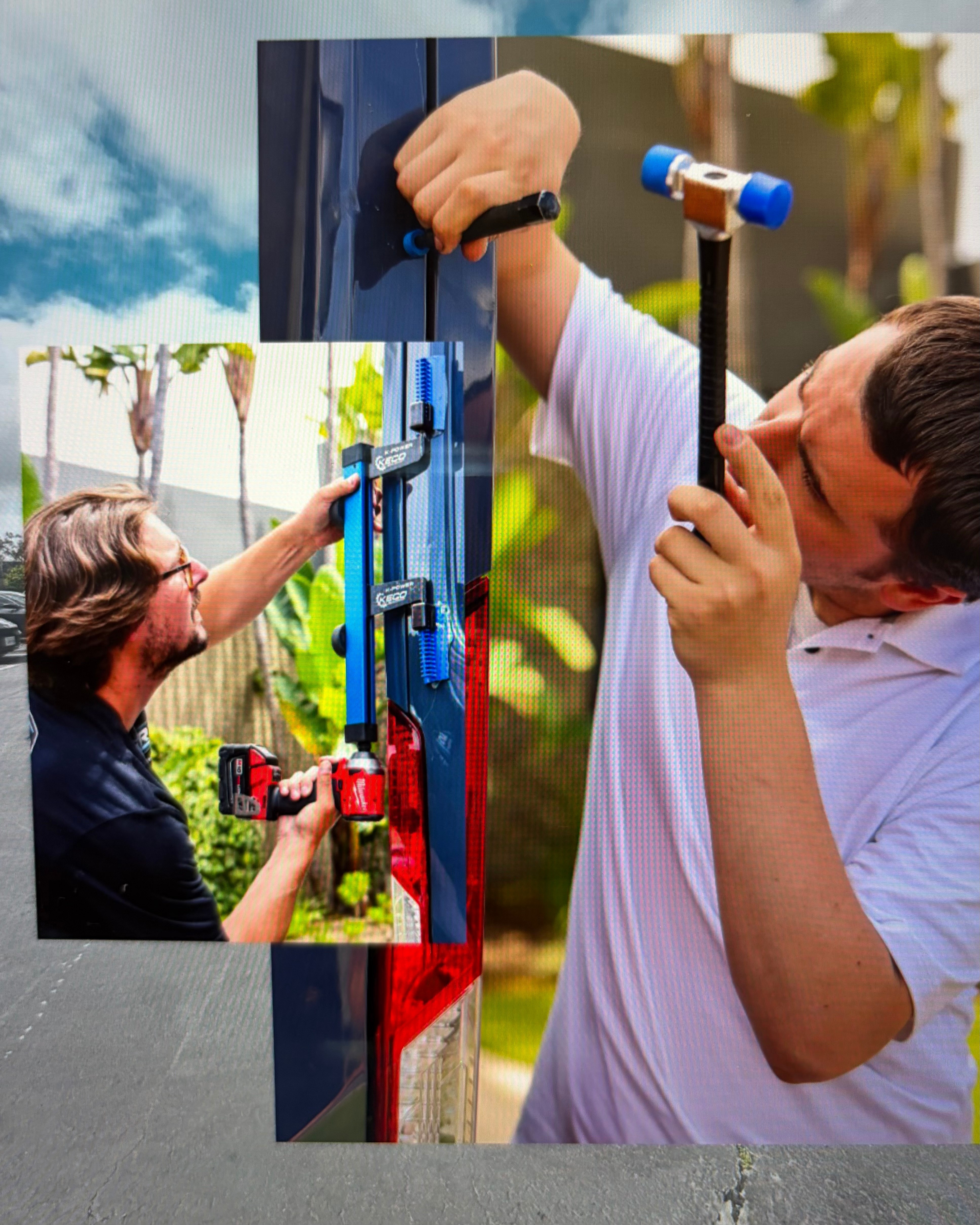
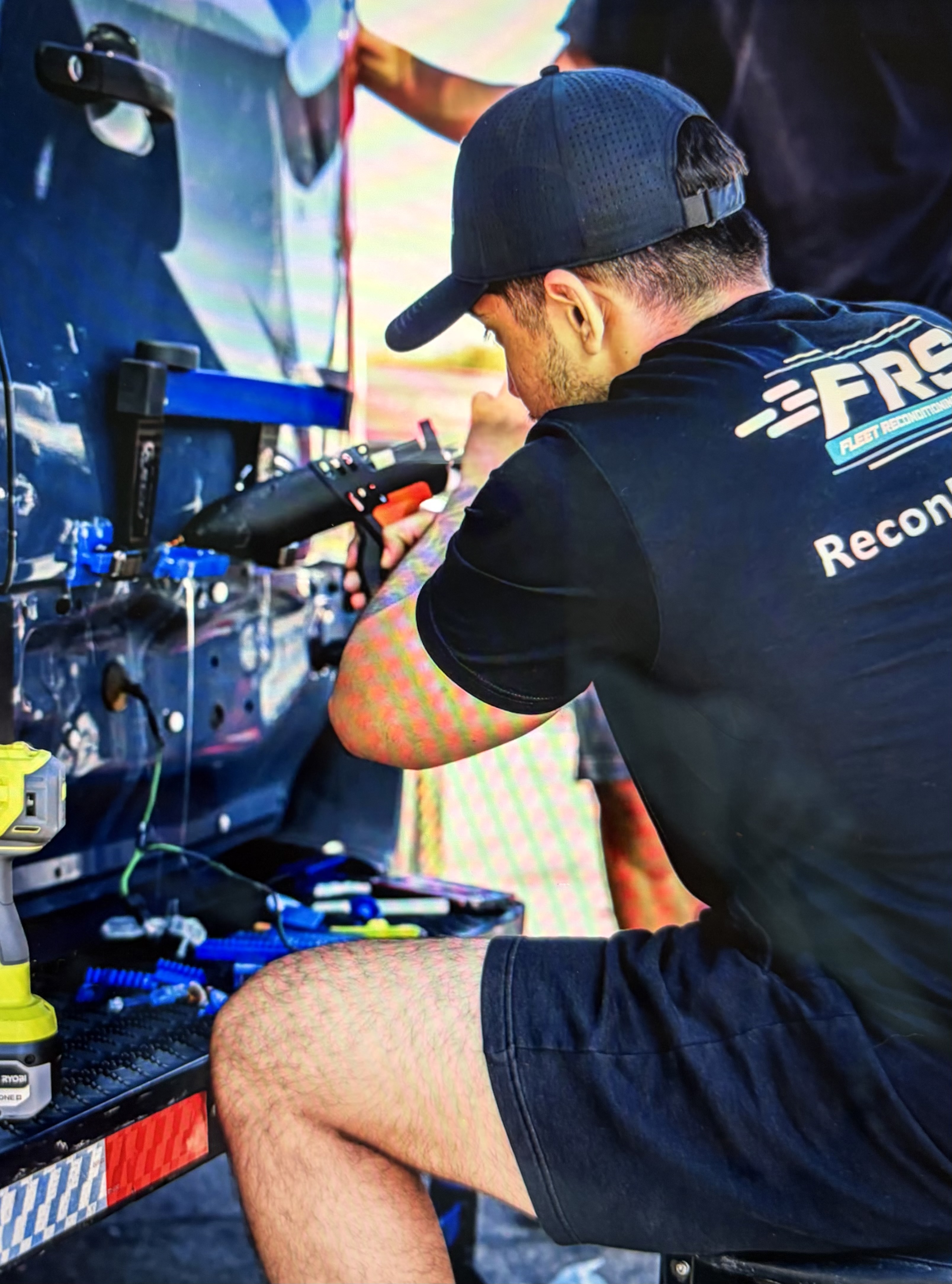
Technicians resolve qualifying dents at local FRS repair facilities without repainting, using precision PDR methods refined over decades.
The Advantage
Fast, finish-preserving repair at scale.
The Impact
Lower per-incident cost and faster return to service.
Paint & Cosmetic Repair
Targeted paint and cosmetic restoration that keeps branded vehicles looking right without full-panel body-shop work.
The Challenge
Scuffs, scratches and cosmetic paint damage rarely justify a full body-shop repair cycle.
The FRS Approach
Specialized paint and cosmetic techniques deliver a factory-quality finish efficiently.
The Advantage
Presentation-grade results, right-sized to the damage.
The Impact
Brand-consistent vehicles kept in service affordably.
Redeployment Reconditioning
Preparing vehicles for reassignment, rebranding or transfer between operations and markets.
The Challenge
Redeploying vehicles across regions or brands requires reconditioning to a consistent standard.
The FRS Approach
FRS reconditions and re-presents vehicles to meet the receiving operation’s standards.
The Advantage
Turnkey preparation for redeployment.
The Impact
Faster reassignment and protected brand consistency.
Retirement / End-of-Life Reconditioning
Reconditioning at fleet retirement to maximize remarketing and resale value.
The Challenge
Vehicles retired without reconditioning sell at a discount and depress fleet economics.
The FRS Approach
FRS restores appearance and condition ahead of remarketing to lift recovered value.
The Advantage
Value recovery at the end of the lifecycle.
The Impact
Improved residual returns on retired assets.
Local FRS Repair Facilities
A network of local FRS repair facilities positioned close to the fleets they serve, minimizing the distance and downtime of every repair.
The Challenge
Sending vehicles to distant body shops consumes days of availability and adds cost and coordination burden.
The FRS Approach
FRS concentrates technicians and equipment at nearby facilities and schedules qualifying work around operational needs.
The Advantage
Repairs happen close to where the fleet operates, not across town at an unfamiliar shop.
The Impact
Reduced downtime, lower logistics cost, minimal disruption to operations.
Valet Pickup & Delivery
Coordinated pickup and delivery that removes the employee time and friction of moving vehicles for service.
The Challenge
Shuttling vehicles to and from repair facilities wastes staff hours and disrupts operations.
The FRS Approach
FRS manages pickup and return so fleet teams stay focused on their routes, not repair logistics.
The Advantage
Zero-friction service coordination.
The Impact
Recovered employee time and smoother fleet operations.
Fleet Damage Assessment
Standardized, technology-assisted inspection that produces consistent damage documentation and repair planning.
The Challenge
Inconsistent damage assessment leads to unpredictable scope, cost and accountability.
The FRS Approach
FRS applies a structured, PAVE-fluent inspection process to document condition and plan work objectively.
The Advantage
Objective, repeatable assessment across the fleet.
The Impact
Better planning, cleaner documentation and fewer disputes.
Objective assessment, repeatable everywhere.
Standardized, technology-assisted inspection produces consistent damage documentation and repair planning, the foundation for predictable scope and cost across every market FRS operates in.
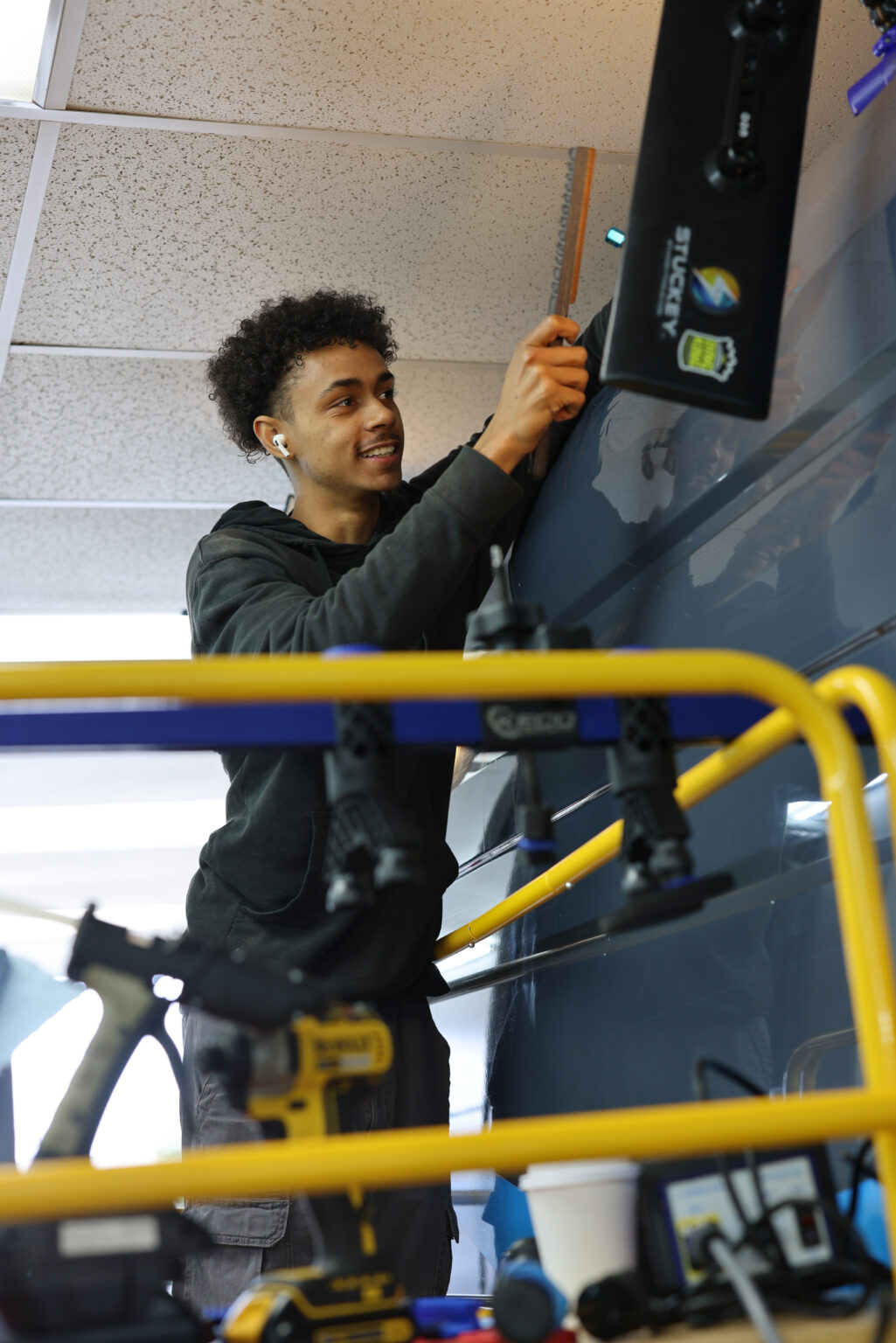
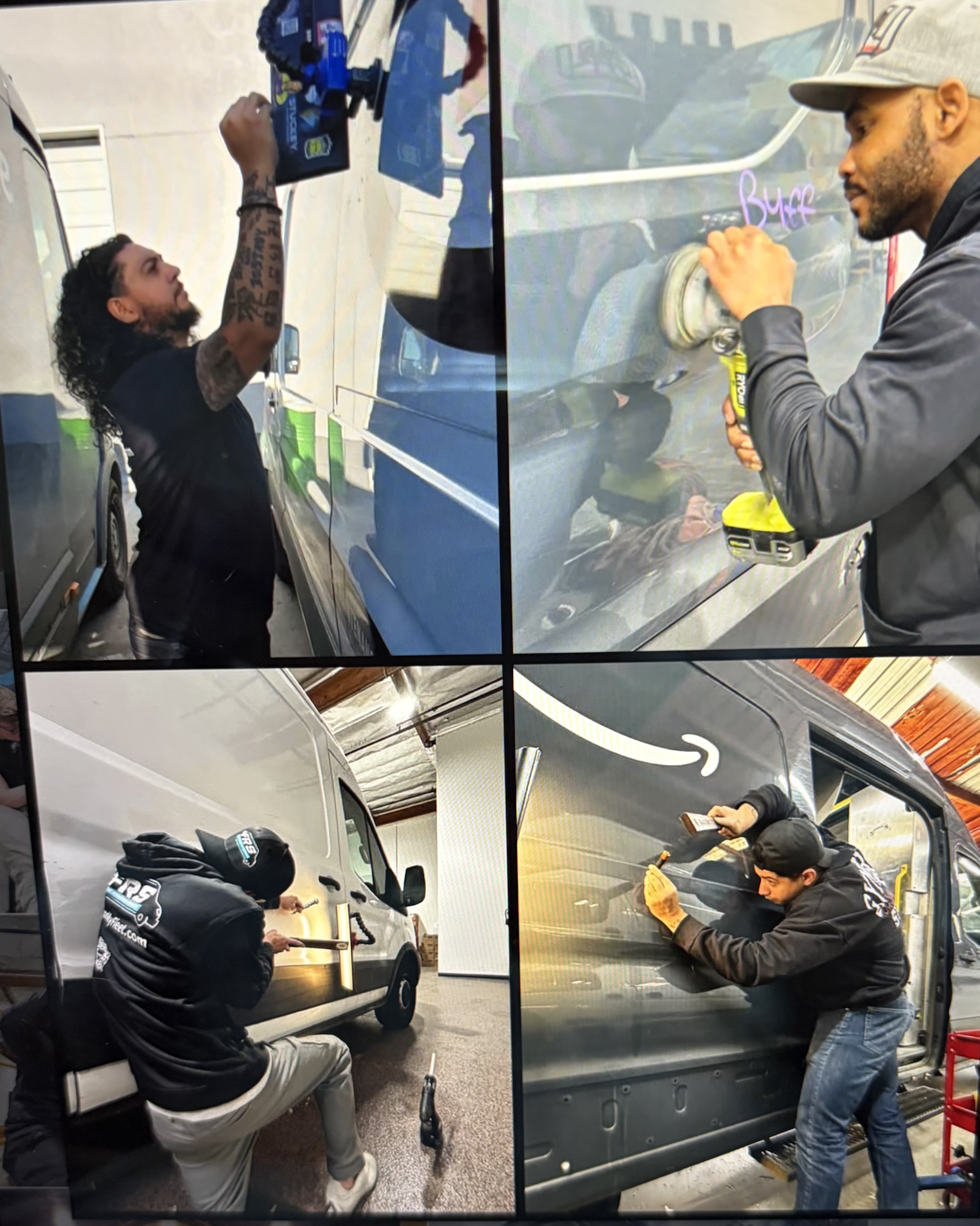
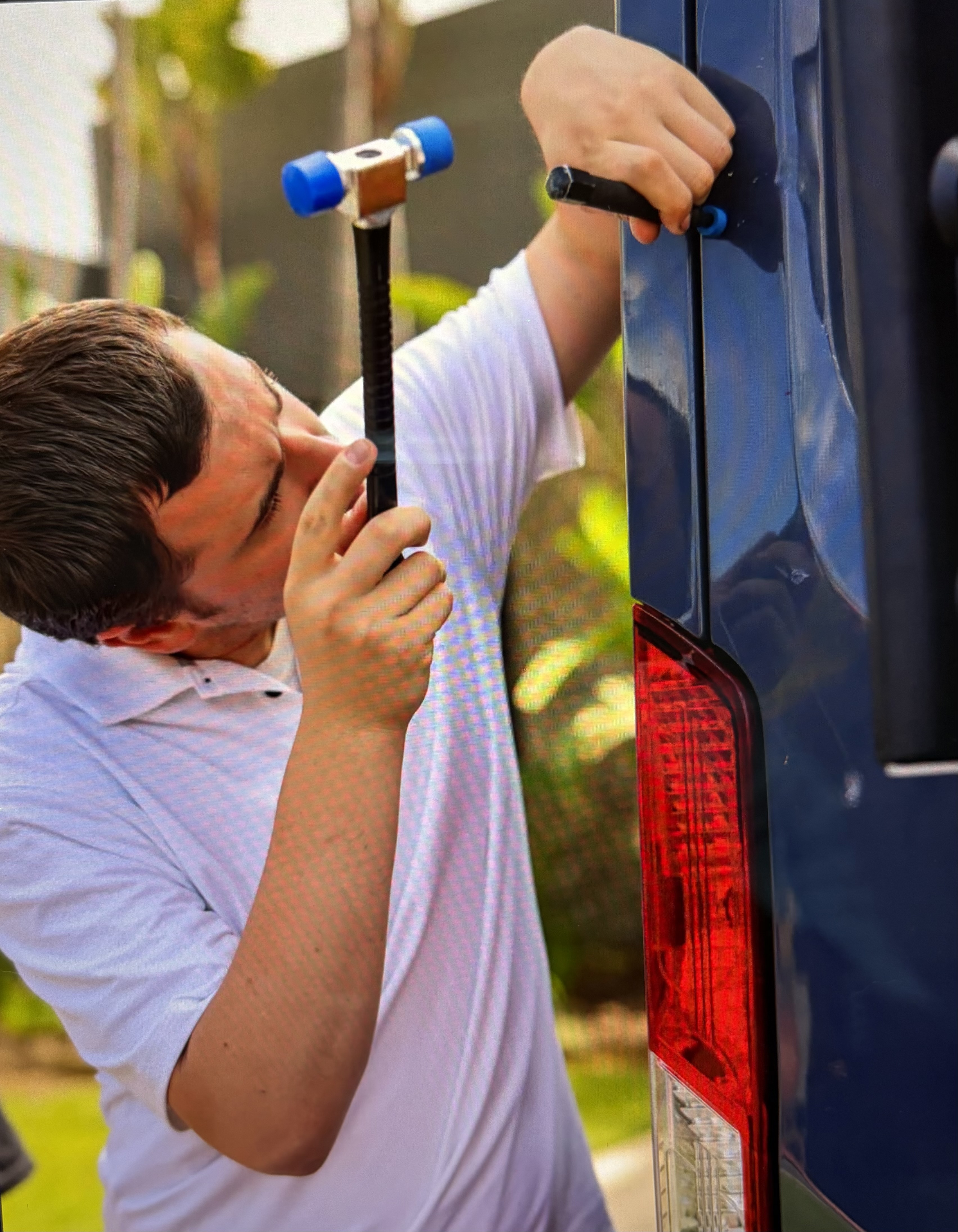
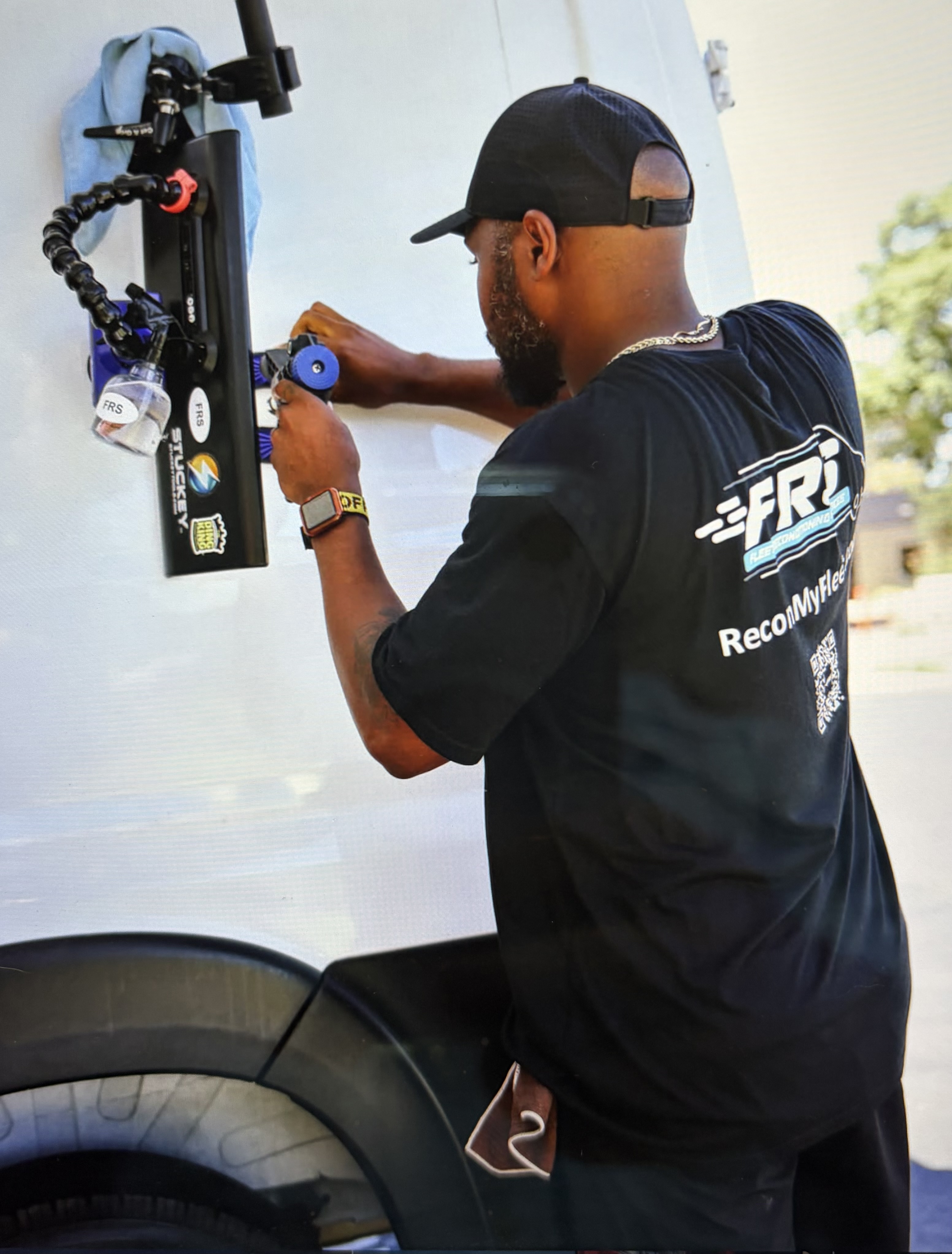
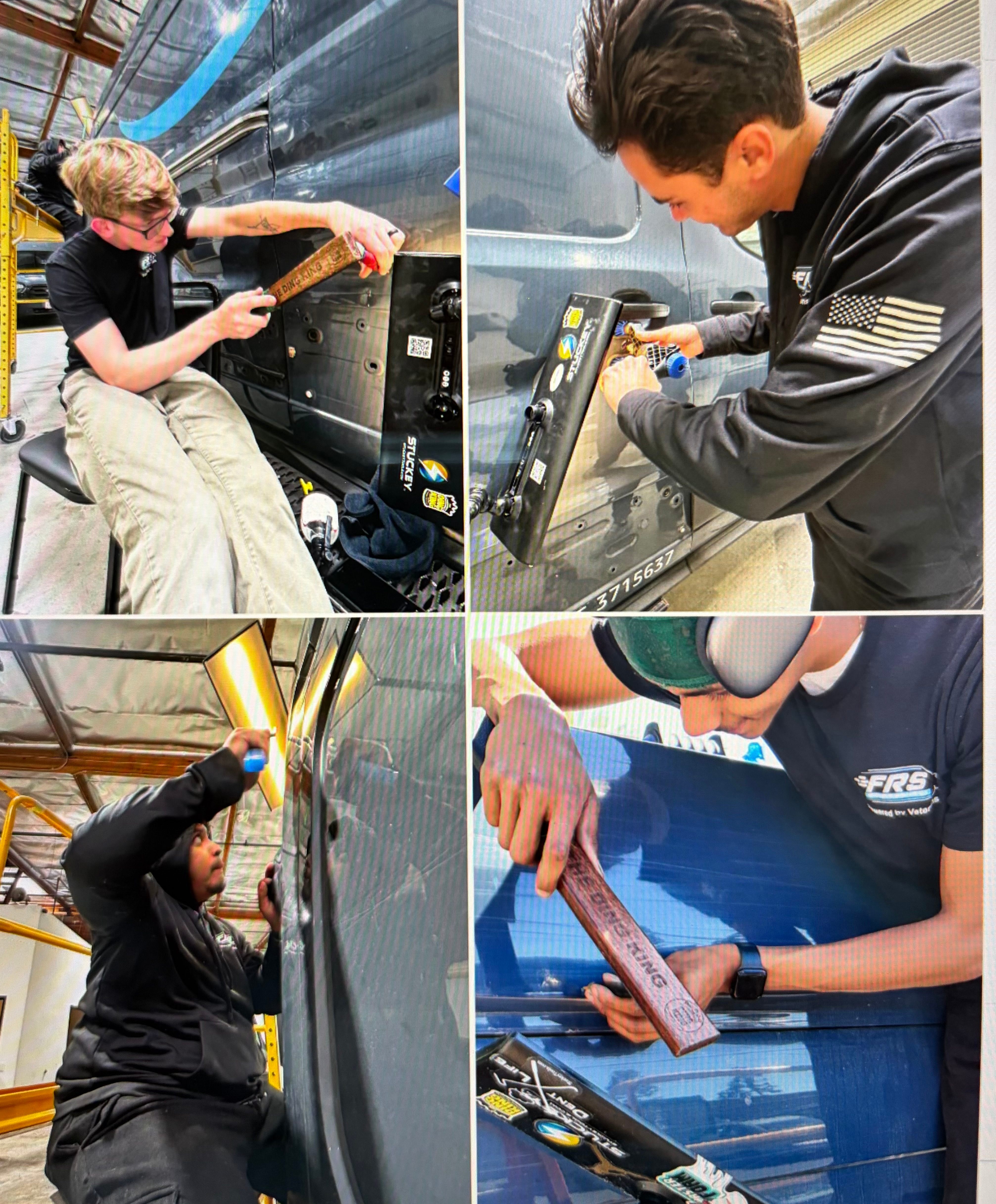
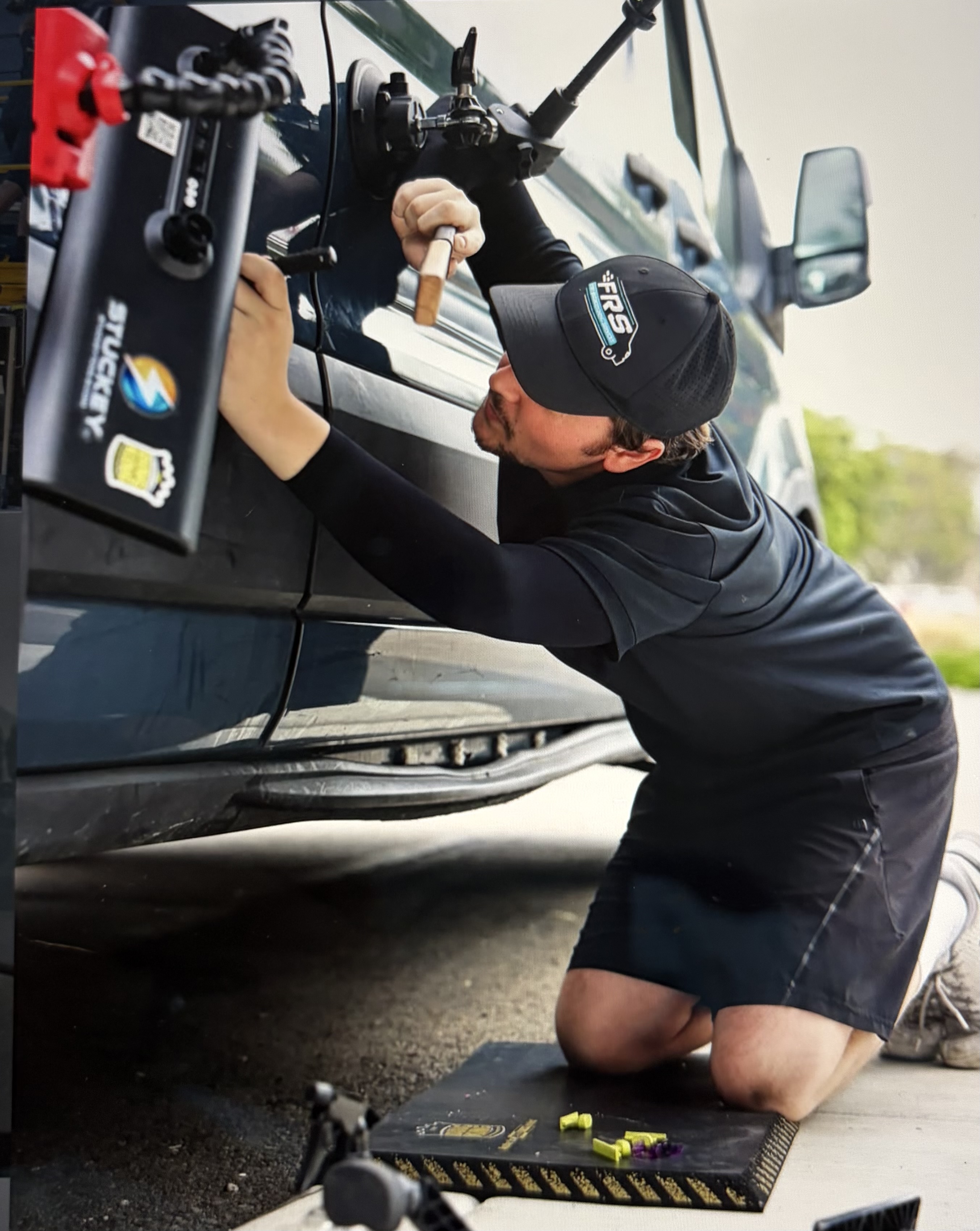
Reconditioning craftsmanship, up close.
Paintless dent repair, panel work and cosmetic restoration performed at local FRS repair facilities by trained technicians, for the commercial fleets that can't afford downtime.
Common questions about fleet reconditioning.
How local FRS repair facilities, paintless dent repair, and full-lifecycle reconditioning work, and how they reduce downtime and cost for commercial fleets.
- What is paintless dent repair (PDR) for fleets?
- Paintless dent repair is a technique that removes dents and dings by gently massaging the panel back to shape from behind, without repainting. For fleets it is ideal: it preserves the original factory finish, costs far less than conventional bodywork, and is fast enough to complete quickly at a local FRS repair facility, keeping branded vehicles presentable and in service.
- Who needs commercial fleet reconditioning?
- Any organization operating branded or high-utilization vehicles benefits: last-mile and Amazon DSP delivery fleets, leasing and rental companies, corporate and municipal fleets, and vehicle remarketers. These operators depend on vehicle appearance and uptime, which is exactly what reconditioning protects.
- How is fleet reconditioning different from a traditional body shop?
- A traditional body shop repairs one vehicle at a time on its own timeline, often over several weeks. FRS delivers a standardized reconditioning program across an entire fleet, performs qualifying work through local FRS repair facilities, and matches the repair to the actual damage, dramatically reducing downtime, logistics, and cost while maintaining consistent quality across every location.
- Where does FRS repair our vehicles?
- FRS operates local repair facilities positioned close to the fleets it serves. Vehicles are reconditioned at a nearby facility around your operational schedule, and coordinated valet pickup and delivery keeps the transport time and coordination burden to a minimum compared with sending vehicles to a distant external shop.
- How does reconditioning reduce fleet downtime?
- By keeping repair facilities local, standardizing the inspection and repair process, and right-sizing each fix, FRS returns most vehicles to service in 3 to 5 days. That avoids the multi-week shop cycles that strand vehicles and disrupt routes.
- Can reconditioning reduce lease-maturity and end-of-term costs?
- Yes. Addressing qualifying wear-and-tear and cosmetic items before lease turn-in reduces chargeable conditions and penalties, and reconditioning at retirement lifts remarketing and resale value, improving overall fleet economics.
- What types of damage can FRS recondition?
- FRS handles dents and dings via paintless dent repair, cosmetic collision damage, paint scuffs and scratches, and accumulated wear and tear. Services span the full lifecycle: routine reconditioning, redeployment and rebranding, and end-of-life reconditioning for remarketing.
Let's Build This
A 33-year family reputation. A proven fleet operating model. A veteran-powered workforce. Six locations today, and a national opportunity ahead.
Help build the national fleet-reconditioning ecosystem.
Explore multi-market fleet reconditioning.